
“My entire life has constantly been sort of outside my comfort zone.
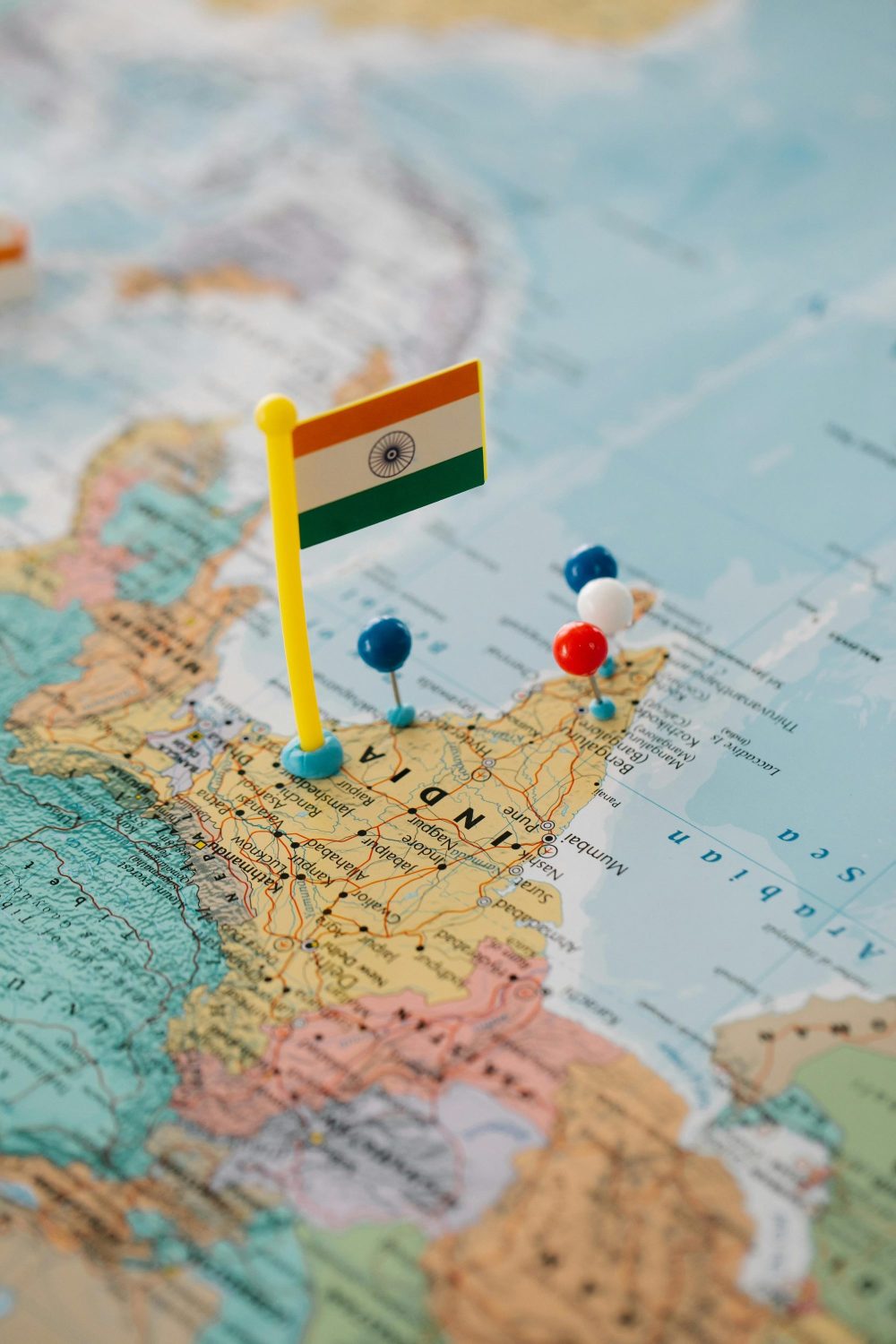
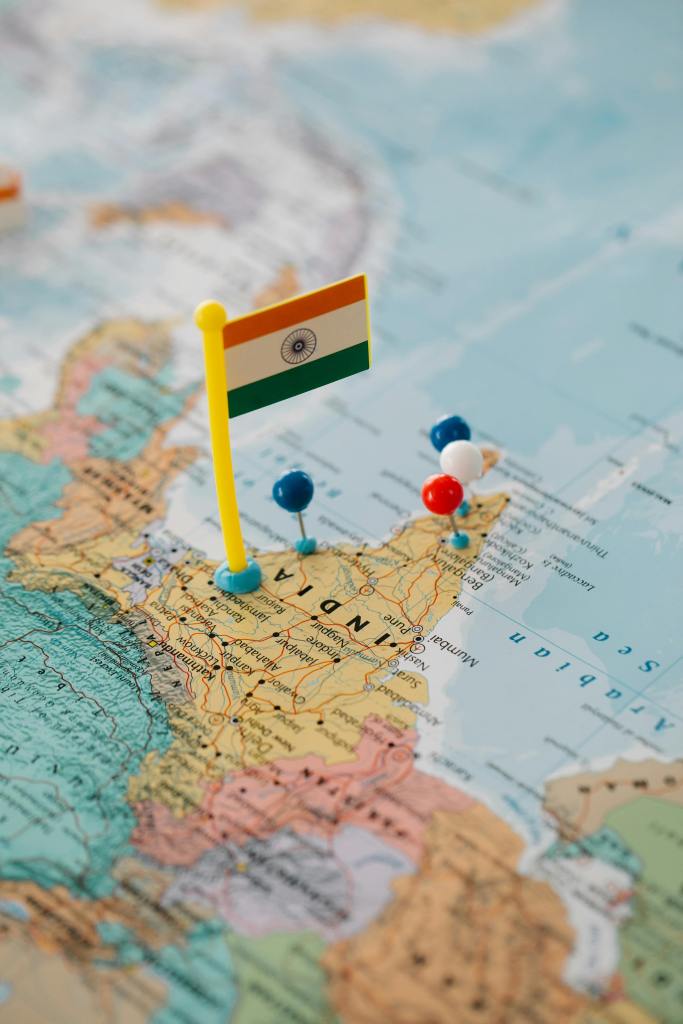
My path has been a little winding. I was born in India and then I moved around a lot growing up. At the age of 5, my family moved to the UK where we lived for 3 years. Then we moved to Boston and lived there for 3 years, then to Los Angeles for 7 years to finish high school. My entire life has constantly been sort of outside my comfort zone. So, combined with the fact that I had excelled in science – and that moving around a lot made me develop a love for people’s stories to connect with them – pushed me towards medicine.
I feel like there was a bottleneck in certain aspects of the medical education training we have here, where, you know, certain things are over emphasized. And the length of training as well as the monetary cost to pursue it. It’s like I had already made the decision to pursue medicine. But now, did I really want to do 4 years of college. Training here made it a little bit less attractive, I guess. although I have no regrets. I decided to pursue a foreign med school back in India. I attended a school in the South Indian state of Kerala and obtained a Bachelor of Medicine, Bachelor of Surgery (MBBS) degree, which is the equivalent of an MD over there. It’s 5-and-a-half-year degree directly after high school. My grandparents were terminally ill and going to school there allowed me to be with them in their last years, which was also important to me.
This was kind of an afterthought, but it also allowed me to see how the medical sector and how healthcare is delivered in different ways throughout the world, both in low resource and high resource settings.
After a gap year doing cardiac outcomes research, I applied and matched to residency in New York right as Covid started. And Covid was interesting because it shook up the medical training. As COVID stuff was getting to normal, in my second year of residency, my father started to have exertional angina. It kind of came out of the blue because he was a non-smoker, non-diabetic, and had no risk factors. He ended up having to undergo surgery for severe multiple vessel disease. And seeing him go through that, I knew I wanted to help other patients and families in the same situation, pushing me to pursue cardiology.
Each country trains doctors for the health sector of that country. The training there was very focused on still history and physical examination, and the strength of your history and physical examination is what’s going to guide you to order the proper diagnostics without over ordering, because you can’t pan order. You know, on the fundamentals of auscultation and palpation to a degree where we don’t see that here. I’m not saying that we don’t learn the fundamentals here. Over there patients present much later because there’s so many different versions of medicine, like home-remedies and ayurvedic medicine. How are you going to auscultate latestage tuberculosis? How are you going to test shifting dullness if there are no patients with ascites? You get all of that experience as a medical student over there.
During medical school while I was under the tutelage of one of the outpatient rural doctors, I was basically working as a resident because the healthcare system there is so stretched thin. You handled a lot more responsibility earlier on in your medical training, because that’s just how that’s just how it goes. I was the only doctor around for or medical student doctor training around for like maybe 50 kilometers, and multiple patients presented to because there was a surrounded by tribal areas. So India has. You know. it’s own indigenous tribal population. It was a very low resource utilized setting. So I had one EKG machine I had, you know I had to. If I needed to transfer them to the nearest semi- capable center, if I needed to transfer them for higher level of care, It’s going to be 30 or 45 minutes to one and a half hours because the roads were not well paved – for the ambulance to get here and go back. But anyway, this patient presented with chest pain it, he was diaphoretic, classic case of acute coronary syndrome. And just that morning either due to power voltage issues or certain electrical malfunctions, the EKG machine had short–circuited, so I couldn’t get an EKG, so I just had to load him with aspirin, do medical management, all in preparation for transferring him to the hospital. Patients present very late in their symptology.
The thought is why do we need to pay somebody else when we have our own village elders, or we have our own people with naturopathic remedies. And India has multiple systems of medicine. You know, allopathic, homeopathic, ayurvedic. obviously, a lot of those things might not get to the root cause of, you know you’re having an acute coronary syndrome. So you know, and he had continued pain for multiple hours he presented. He was definitely outside of the window for TPA. In the US, we’re very evidence based as it should be. Everything has a protocol. Everything has a time limit, you know, if it’s a stroke 90 minutes, if it’s a it’s a heart attack 3 hours things like that. But in India it’s kind of like you do with the best with what you have. Actually, in some ways, if you’re outside of the bigger cities, it’s the same thing in the United States. It still is very applicable even to us. So you know you could be a farmer in the middle of Montana. Not be close to a hospital, and they might need to hellevacu out to the nearest tertiary center.
During this time, I helped my grandparents with terminal illnesses at least 2 weekends a month. I went with them to their doctor’s appointments. I’d kind of reconciled their medications. But it also opened my eyes to a lot of the stuff that you know, What do patients at that stage of life really want. And I carried that forward, you know, seeing it in my grandparents, made it very personal, but seeing it in other patients, I still consider it personal. Where it’s like, I want to know. Not just do you want. How do you want this treated? Because then a robot could do our jobs, you know. It’s like you could just tell them, get this, get this fixed. But it’s like in your stage of life. What are your goals of care? Do you want to be independent? How do you get your groceries? Do you have to climb up 2 flights of stairs? These are the questions that it’s like, I find it very necessary to ask.
This is obviously like bias, but especially when I see immigrants come in with some of the same issues that my dad had or you know my grandma had, I identify a lot more with them. It might not even be cultural. It’s more like we had the same situations.
For example, I just recently admitted a very elderly lady with multiple falls. She had advanced rheumatoid arthritis with on Methotrexate and on all of these DMARDs. And I totally relate I was like, Oh, and she was like, ‘do you know anything like about this?’ And I was like, yeah, I know a couple of things. So, it’s almost like those moments in Slumdog Millionaire where, you know, he’s like answering those questions on that show, but then there’s a huge flashback, and he’s like, oh, you have all these like experiences you can draw on. That’s how I tackle medical conversations. And that’s what makes the breadth of experiences, the diversity of experiences one has as a healthcare provider so unique because without that breadth of experiences, wow would you relate to everybody outside you? That connection isn’t something that’s formed through just a textbook. You have to draw on your experiences, and that’s the connection that patients are usually looking for. Obviously they want to get better but I feel like that’s what is meant for advocating for a patient is like you not only put yourself in their shoes, but you have to kind of draw on your experiences and be like these are the options, and this is what you’re looking at, and give them kind of an insider perspective because tthey may or may not be part of the healthcare system. They don’t know how the system works but you. You have one foot in both worlds. But if you were stern, standing firmly in the medical world. I don’t think you can do justice by the patient. You have to kind of put yourself in their shoes as well.
You know certain cultural nuances, and like patients, just their faces light up when you speak their language. And a lot of New York. New York is so diverse. It’s like a microcosm of the entire world. You know, there’s 160 languages spoken within this like 10 mile radius. But specifically, like a lot of times where cause I speak 3 different South Indian languages, and when they present it to the Ed. When I’m the first provider they see you know I don’t immediately jump into like Oh, you know you’re : we speak the same language, because I can sort of tell by their name, or like, you know, if they there’s certain questions answer. But then, later on, I when they’re more comfortable. Whenever we establish a report then I’d be like, Hey, I also speak your language, and then, if they’re comfortable, I kind of continue with them in the language, and be like, you know. Where are you? Where are you from? And how long is it be doing that? Or how’s your family doing?
As a practicing Hindu, you kind of see God in everybody. it was an extension of that and it was like, Okay, I see God and everybody. No matter if you know where you’re from, what you’re currently doing. If you want to get better, I’m going to be your partner and helping you get better.
Don’t forget where you came from. Nothing is a wasted experience, and everything adds to your own story, and the beauty of the healthcare system. Here is although the the process to get in and everything might be sometimes flawed and a lot of bottlenecks strewn about. invest your time into things. into broad experiences that will deeper your understanding of both the healthcare system and people in general. And that that’s I feel like that’s what I’ve tried to do in my in my kind of journey towards where I am today. it’s also equally important to be true to yourself and develop the personality and experiences that it’s going to help you relate to patients later down in the line.”

 Immigrants of Medicine
Leave a comment